Losing a passport abroad is one of those travel nightmares that sounds like it only happens to other people, until it happens to you. We have talked with travelers who spent three days at an embassy in Rome trying to get home, and others who had credit cards skimmed without ever handing them to anyone. These situations are more common than the travel brochures suggest, and most of them are preventable with a simple, consistent system.
This guide walks through five concrete steps we follow every time we travel internationally or in any destination where crowded transit hubs and tourist areas create real risk. The centerpiece of our system is the VENTURE 4TH RFID neck wallet, which holds our passport, backup card, and emergency cash flat against our chest and completely out of sight. We will explain when and how to use it, but the steps before and after matter just as much.
Traveling soon? This is the neck wallet we trust to keep our passport invisible and protected.
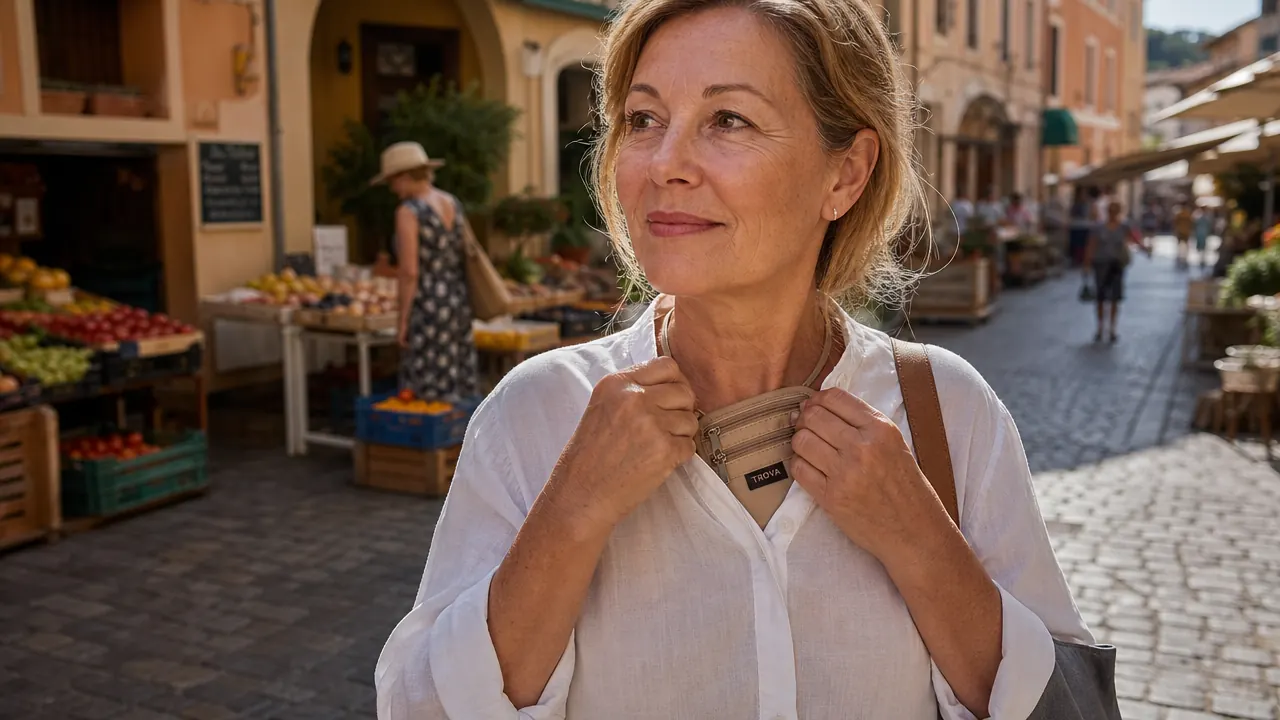
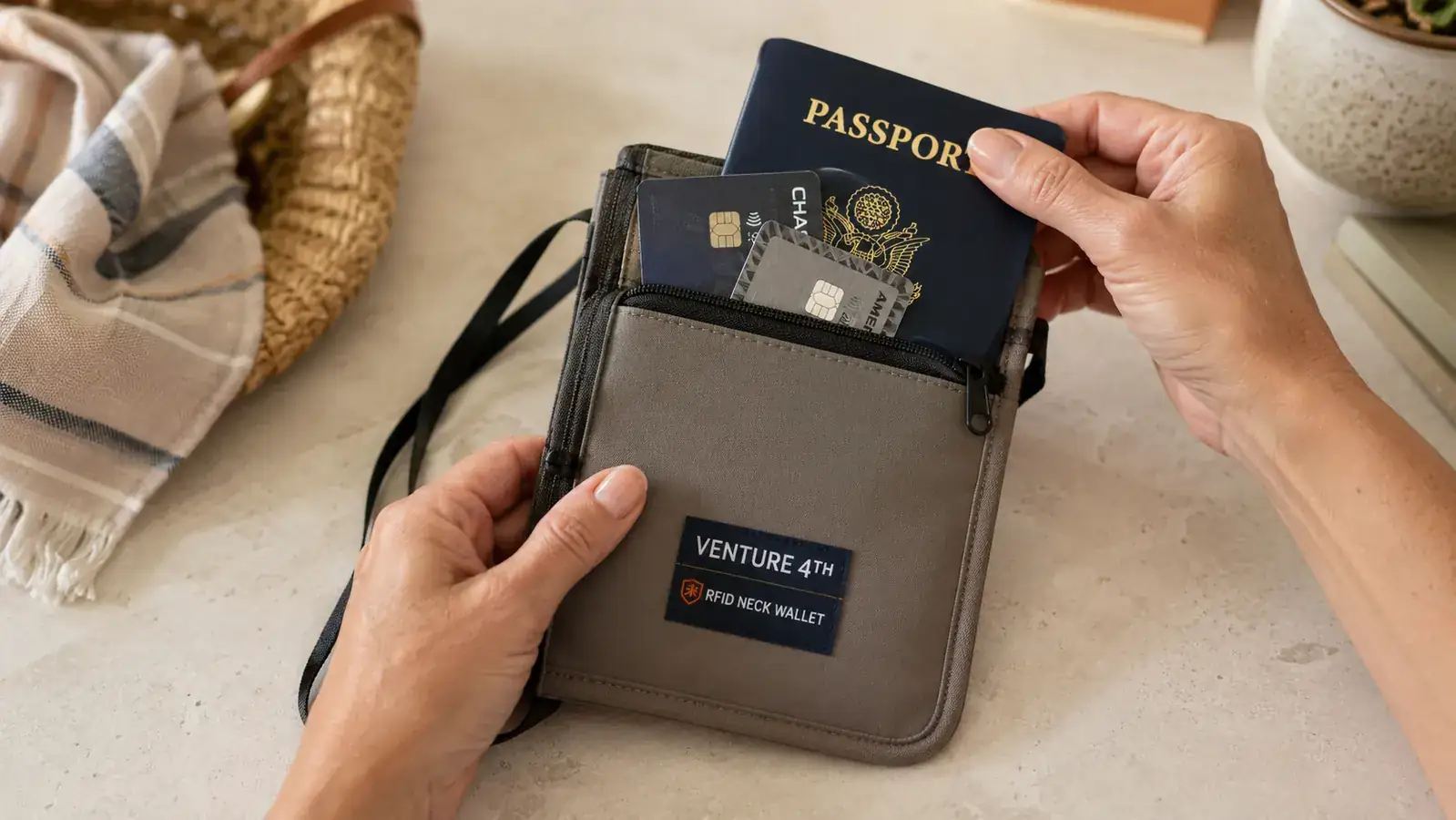
The VENTURE 4TH neck wallet has RFID blocking built in, sits flat against your chest under your clothing, and fits a full-size passport plus several cards. Over 12,000 travelers rate it 4.6 out of 5 stars on Amazon.
Amazon Check Today's Price on Amazon →Step 1: Decide Before You Pack What Goes in the Neck Wallet and What Stays in the Bag
The most common mistake travelers make is treating the neck wallet as a last-minute addition, something they shove into their carry-on and figure out at the airport. That approach leads to uncertainty, fumbling, and carrying more than necessary. Before you leave home, sit down and decide exactly which documents and cards go in the neck wallet for the entire trip.
Our rule is simple: the neck wallet carries your passport, one backup credit or debit card, and the local currency you expect to spend in a single day. That is it. Your main travel wallet, which you leave in a hotel safe or a zippered interior bag pocket, holds your other cards, membership cards, and extra cash. The neck wallet is not your full financial life. It is your emergency kit, the documents you cannot afford to lose, wrapped in a slim, concealable pouch.
For most travelers, that translates to the passport, one Visa or Mastercard, and roughly $40 to $60 in local bills. Keep the pouch from getting thick. A bulging neck wallet is visible under clothing and uncomfortable to wear for long stretches.
Step 2: Understand the Real Risks So You Are Not Solving the Wrong Problem
Two types of theft account for almost all lost travel documents: physical pickpocketing in crowded spaces, and RFID electronic skimming near contactless payment and passport chips. They require different defenses, and a good neck wallet addresses both.
Physical pickpocketing happens at predictable moments: boarding a bus, standing at a market counter, navigating a tight metro turnstile, or getting bumped in a crowd near a major tourist landmark. The thief is not dramatic. The brush is brief and professional. Your front pants pocket, your back pocket, and the exterior zip pocket of a daypack are all high-risk. A neck wallet under your clothing eliminates access entirely because there is no external pocket to reach.
RFID skimming is a genuine but often overstated risk. Modern passports issued after 2007 contain a chip that stores your identifying data. Contactless credit and debit cards have the same technology. A reader held within a few inches can pull that data wirelessly. The VENTURE 4TH neck wallet uses a metallic RFID-blocking layer in the pouch material that blocks these radio frequency reads entirely. You do not have to think about it. The protection is passive and always on.
Step 3: Put the Neck Wallet On Correctly So It Stays Hidden and Comfortable All Day
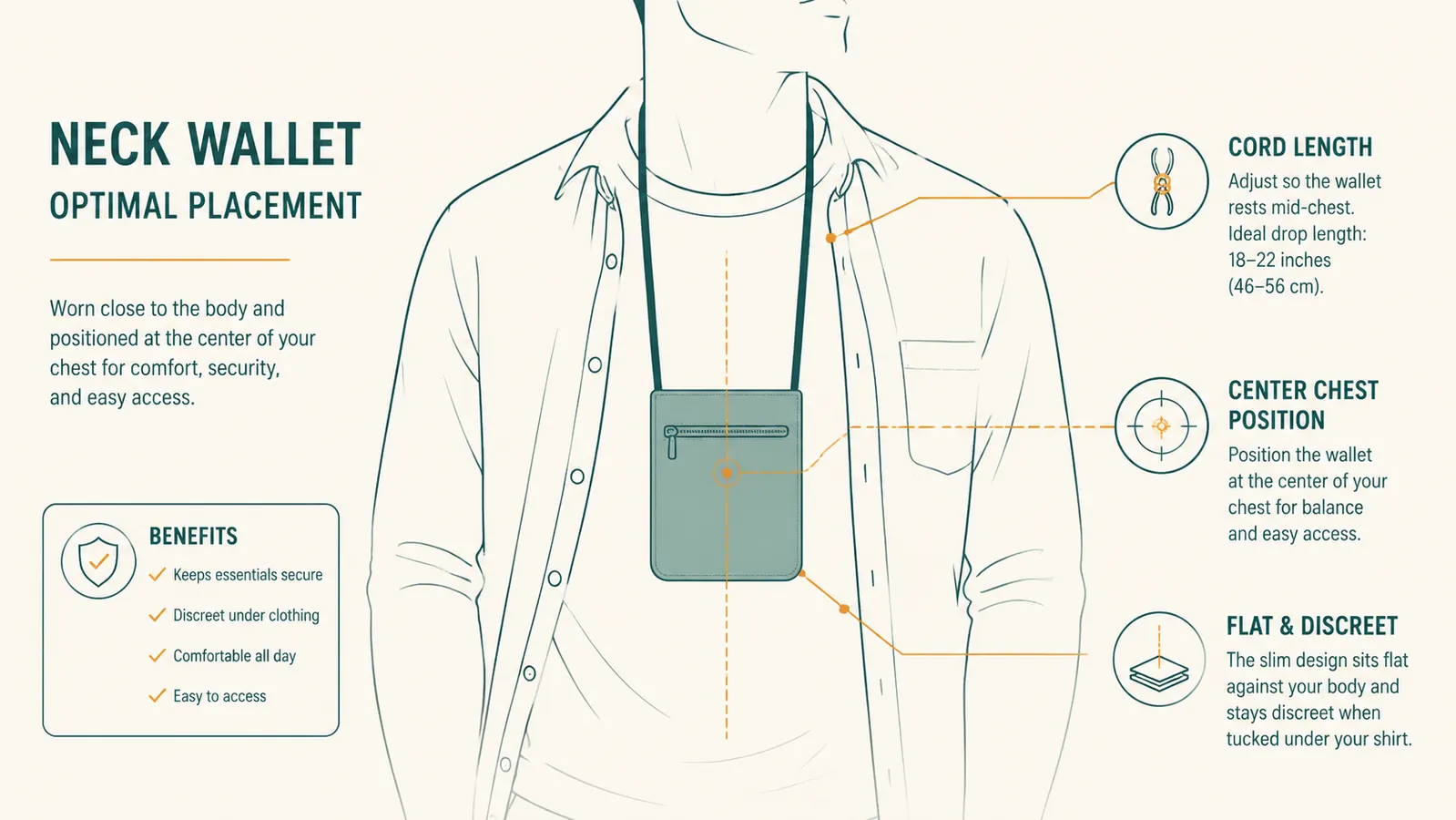
The VENTURE 4TH neck wallet has an adjustable cord that you wear around your neck, with the flat pouch resting centered on your chest. The goal is to position the pouch below your collarbone and above your bra line or shirt pocket, flat against your sternum. Adjust the cord length so there is no swing or sag when you walk. If the pouch bounces, it both shows through lightweight clothing and becomes annoying to wear over a long day.
To conceal it completely, wear it under your shirt rather than over it. A loose linen shirt, a light travel blouse, or a button-down all work well. Fitted athletic wear is less ideal because the outline shows. When you need to access your passport at check-in or a border crossing, simply reach inside your neckline, pull the pouch out, unzip it, and present your document. It takes about five seconds once you have practiced it twice. Agents are very accustomed to watching travelers retrieve documents from neck wallets.
One comfort note: for all-day warm-weather wear, the pouch rests against your skin. The VENTURE 4TH material is lightweight nylon that does not retain heat the way leather pouches do, but on a hot day you may want to place a thin undershirt layer between the pouch and your skin. Most travelers find it comfortable after an hour and stop noticing it entirely.
Step 4: Use Smart Location Habits to Layer Your Security
The neck wallet handles storage, but your habits in public are equally important. Three location rules make a real difference on every trip.
First, never take out your passport in a crowd unless you have to. If someone on the street asks to see your passport, decline politely and say you will show it at the relevant official counter. Legitimate requests to inspect documents happen at border crossings, hotel check-ins, and car rental desks, not on sidewalks or in restaurants.
Second, when you do need to access the neck wallet in public, turn away from the crowd before reaching inside your shirt. A wall at your back, a corner in a quiet hallway, or a moment inside a restroom stall gives you privacy. It sounds overly cautious until you realize how quickly and calmly experienced pickpockets work in busy destinations.
Third, keep a color photocopy of your passport's photo page in a separate bag, and also email a scan to yourself. If the original is lost or stolen, the copy dramatically speeds up emergency replacement at your nearest embassy or consulate. The State Department recommends this, and it costs nothing.
The neck wallet does not replace good habits. It gives you a fallback that works even when your habits slip in a moment of travel exhaustion.
Step 5: Know Exactly What to Do If Your Passport Is Lost or Stolen Abroad
Even with the best system, things occasionally go wrong. Travel fatigue, a very fast pickpocket, or a hotel room incident can still happen. Knowing the process in advance removes the panic and gets you home faster.
File a police report within 24 hours of the theft or loss. Bring this report to your country's nearest embassy or consulate along with your backup photo, your government ID, and two passport-size photos if you can source them locally. Many cities near major tourist destinations have photo services within a few blocks of the embassy. The U.S. Embassy can often issue an emergency passport within one to three business days for travelers who have documented the loss.
Notify your bank immediately about any compromised cards. Most major card issuers can overnight a replacement card to a hotel address abroad, or you can use Apple Pay or Google Pay if you have them set up on your phone, which is not affected by a physical card theft.
The travelers we spoke with who handled passport theft calmly all had one thing in common: they had the embassy address and phone number saved in their phone before departure. Spend two minutes before any international trip searching for 'U.S. Embassy [destination city]' and saving the address and emergency phone number as a contact. This single habit makes the entire recovery process faster.
What Else Helps: Supporting Gear Worth Considering
The neck wallet is the core of any travel security system, but a few supporting habits and products make the whole setup more reliable. A small combination lock on your zipped daypack adds a meaningful deterrent for grab-and-run theft, since it slows access to a bag sitting on a cafe chair behind you. Anti-cut straps on a crossbody bag are worth considering for densely crowded transit hubs in cities like Barcelona, Rome, or Bangkok where slash-and-grab bag theft is periodically reported.
For hotel room security, the built-in safe is your first choice for storing extra cash, your second passport card, and any valuables you do not need for the day. If your room does not have a safe, most hotels will lock items in the front desk safe on request. Luggage locks on your checked bag do not protect against sophisticated theft, but they do deter opportunistic searching during handling.
Finally, a solid travel insurance policy that covers document replacement, emergency medical evacuation, and trip interruption is the backstop for everything else. A neck wallet protects your passport most of the time. Travel insurance protects you the rest of the time. These two things together cover most of the scenarios that derail international trips.

Ready to travel with one less thing to worry about?
The VENTURE 4TH RFID neck wallet is the simplest way to keep your passport and backup card out of sight and out of reach for every trip. It fits a full-size passport, multiple cards, and some folded bills, and the RFID blocking works passively with no effort from you. Rated 4.6 out of 5 stars by over 12,000 travelers.
Amazon Check Today's Price on Amazon →